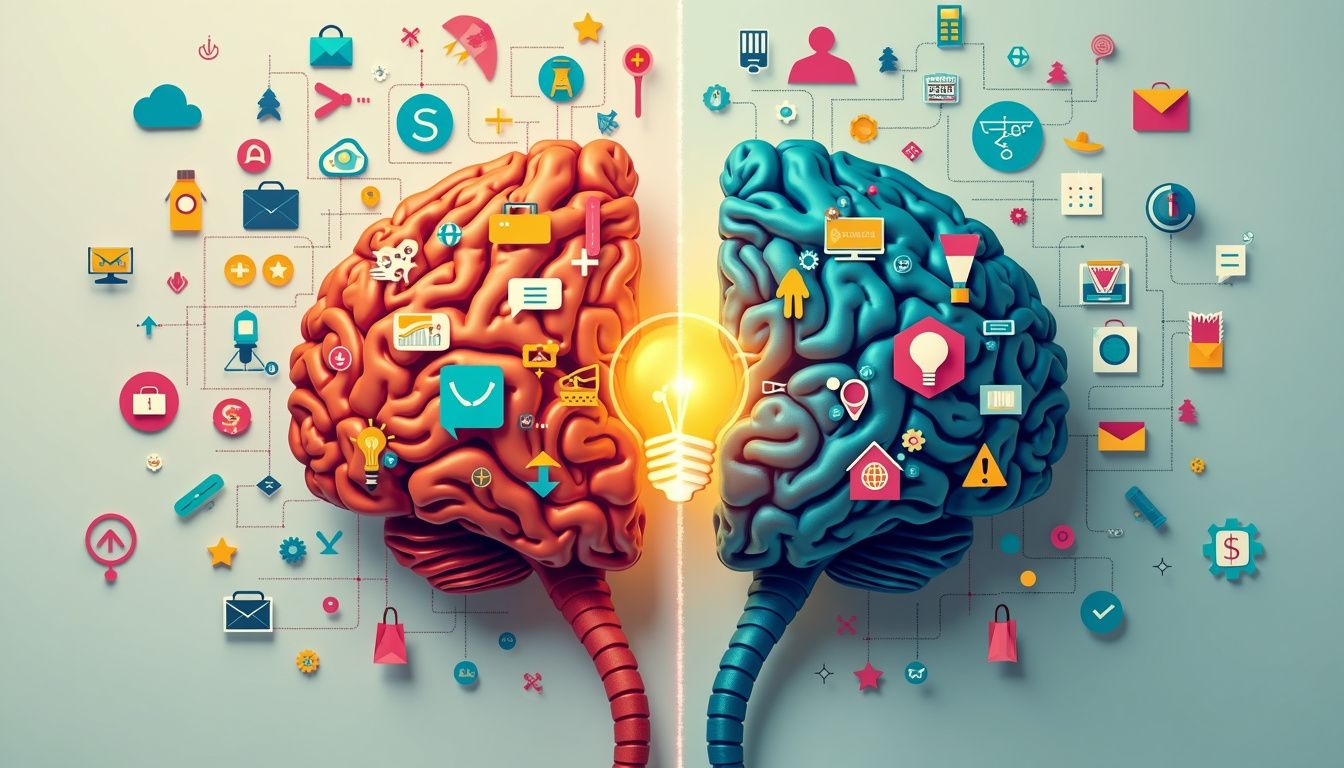
Your emotions often provide more valuable insights than cold, hard facts when making decisions. Gut instincts and intuition, honed through evolution, can process complex information rapidly, outperforming rational analysis in time-sensitive situations. Emotional intelligence enhances decision-making by improving understanding of yourself and others. In relationships, acknowledging feelings is often more effective than logical arguments. Emotions serve as essential survival mechanisms, influencing physical health and well-being through the mind-body connection. While it's important to balance emotion with logic, suppressing feelings can lead to psychological and physical issues. By understanding the power of emotions, you'll reveal a deeper perspective on decision-making and personal growth.
Key Takeaways
- Emotions serve as rapid response mechanisms for threats and opportunities, enabling quicker decision-making in complex situations.
- Emotional intelligence enhances understanding of personal and others' emotions, leading to improved social interactions and decision satisfaction.
- Gut instincts and intuition can outperform rational analysis in time-sensitive scenarios, drawing on subconscious knowledge and experiences.
- Acknowledging emotions in relationships fosters deeper connections, trust, and more effective conflict resolution than purely logical arguments.
- Emotional expression is crucial for maintaining mental health, while suppression can lead to increased stress, anxiety, and physical health issues.
The Power of Gut Instincts
Gut instincts often kick in when we're faced with significant decisions. You might feel a sudden urge to take a certain action or avoid a particular situation without fully understanding why. These intuitive feelings arise from your subconscious mind, which processes vast amounts of information faster than your conscious thoughts can keep up.
Your gut instincts can be a powerful tool for keeping you safe. They're rooted in your body's innate survival mechanisms, honed over millennia of human evolution. When you sense danger, even if you can't pinpoint its source, it's wise to pay attention. Your instincts might pick up on subtle cues that your conscious mind hasn't yet registered.
However, it's essential to balance gut feelings with rational thinking. While instincts can provide valuable insights, they're not infallible. They can be influenced by past experiences, biases, and fears that may not apply to your current situation. When making significant decisions, consider your gut reaction, but also gather facts and analyze the situation objectively.
To harness the power of your gut instincts effectively:
- Practice mindfulness to become more attuned to your body's signals.
- Reflect on past experiences where your instincts proved correct or misguided.
- Give yourself time to process your feelings before acting on them.
- Seek advice from trusted sources to gain additional perspectives.
- Trust your instincts in emergencies when quick action is necessary.
Emotional Intelligence in Decision Making
Beyond gut instincts, emotional intelligence plays an essential role in decision-making. You'll find that understanding and managing your emotions, as well as recognizing those of others, can lead to more effective and satisfying choices.
Emotional intelligence allows you to navigate complex social situations, read non-verbal cues, and respond appropriately to the needs and feelings of those around you.
When you're faced with a decision, your emotional intelligence helps you consider the potential impact on yourself and others. It enables you to anticipate how different outcomes might affect relationships, team dynamics, or workplace morale. By tapping into this emotional awareness, you're more likely to make choices that foster harmony and cooperation.
Emotional intelligence also enhances your ability to communicate effectively during decision-making processes. You'll be better equipped to express your thoughts and concerns clearly, while also being receptive to others' perspectives. This skill is particularly valuable in group settings, where diverse opinions and emotions can influence the final outcome.
Moreover, emotional intelligence helps you manage stress and remain calm under pressure. When you're able to regulate your emotions, you're less likely to make impulsive decisions driven by fear or anxiety. Instead, you can approach challenges with a level head and consider all options rationally.
When Intuition Beats Rationality
Intuition, often dismissed as unreliable, can sometimes outperform rational analysis in decision-making. You might find yourself in situations where your gut feeling provides quicker and more accurate guidance than a lengthy logical process. This is particularly true in complex scenarios with numerous variables or when you're faced with time constraints.
Your intuition draws from a vast pool of subconscious knowledge and experiences, allowing you to process information rapidly and holistically. In high-pressure situations, such as emergency responses or critical business decisions, relying on intuition can lead to safer outcomes. It's your brain's way of quickly evaluating potential risks and rewards without getting bogged down in details.
However, it's important to understand when to trust your intuition and when to rely on rational analysis. Intuition works best in areas where you have significant expertise or experience. If you're a seasoned firefighter, your intuitive decisions during a rescue operation are likely to be more reliable than those of a novice.
To harness the power of intuition safely, you should:
- Cultivate self-awareness to distinguish between genuine intuition and biases.
- Reflect on past intuitive decisions to improve your gut instincts.
- Use intuition as a starting point, then verify with rational analysis when time allows.
- Practice mindfulness to enhance your ability to recognize intuitive signals.
- Seek feedback on intuitive decisions to refine your instincts over time.
Feelings as Evolutionary Survival Tools
Evolving alongside our cognitive abilities, emotions have played an integral role in human survival. Your feelings act as a rapid response system, alerting you to potential threats and opportunities in your environment. Fear, for instance, triggers your fight-or-flight response, preparing you to face danger or flee to safety. This instinctive reaction has helped our ancestors survive predators and other life-threatening situations.
Emotions also guide your social interactions, an essential aspect of human survival. Empathy allows you to understand and connect with others, fostering cooperation and group cohesion. This ability to form strong social bonds has been significant for our species' success, enabling us to work together, share resources, and protect one another.
Your feelings of disgust serve as a protective mechanism against potential sources of disease or contamination. This emotion helps you avoid consuming spoiled food or coming into contact with harmful substances, reducing your risk of illness.
Love and attachment emotions strengthen family bonds, ensuring the care and protection of offspring. These feelings motivate parents to invest time and resources in their children, increasing the likelihood of their survival and the continuation of genetic lineages.
Even seemingly negative emotions like anger can serve a protective function. Anger motivates you to stand up for yourself and others, defend your rights, and maintain social order. It can also provide the energy and determination needed to overcome obstacles and achieve goals.
Emotions in Personal Relationships
Emotions are the lifeblood of personal relationships. They shape how you connect with others, interpret their actions, and respond to their needs. In your closest relationships, emotions often take precedence over logic, influencing your decisions and behaviors in profound ways.
When you're emotionally invested in a relationship, you're more likely to:
- Forgive mistakes and overlook flaws
- Make sacrifices for the other person's well-being
- Anticipate and meet their needs without being asked
- Feel deeply affected by their joys and sorrows
- Prioritize the relationship over other aspects of your life
These emotional responses strengthen bonds and foster intimacy, creating a sense of safety and trust between you and your loved ones. By allowing yourself to be vulnerable and express your feelings openly, you invite others to do the same, deepening your connection.
However, it's vital to recognize that emotions can sometimes cloud judgment. While they're important for building and maintaining relationships, balancing them with rational thinking is key to steering through conflicts and making important decisions together.
In times of disagreement, acknowledging and validating each other's feelings can be more effective than presenting logical arguments. This approach shows empathy and respect, even when you don't see eye to eye.
The Mind-Body Connection
The mind-body connection plays a vital role in our emotional experiences. Your thoughts and feelings directly impact your physical health, and conversely, your physical state influences your emotions. This intricate relationship underscores the importance of understanding and nurturing both aspects of your well-being.
When you experience stress or anxiety, your body responds with physical symptoms like increased heart rate, muscle tension, and rapid breathing. These physiological changes can further amplify your emotional state, creating a feedback loop. By recognizing this connection, you can take steps to break the cycle and regain control of your emotions.
Practicing mindfulness techniques, such as deep breathing exercises or meditation, can help you become more aware of the mind-body connection. As you focus on your breath and physical sensations, you'll notice how your thoughts and emotions affect your body, and vice versa. This awareness empowers you to make conscious choices about how you respond to various situations.
Regular exercise is another powerful tool for strengthening the mind-body connection. Physical activity releases endorphins, which can boost your mood and reduce stress.
Additionally, engaging in activities that challenge your body can increase your confidence and self-esteem, positively impacting your emotional well-being.
Psychological Impact of Suppressing Emotions
Suppressing emotions can have far-reaching psychological consequences that many people overlook. When you bottle up your feelings, you're not just pushing them aside; you're creating a pressure cooker of unresolved emotions that can eventually lead to serious mental health issues.
Constant emotional suppression can result in:
- Increased stress and anxiety
- Depression and mood swings
- Difficulty in maintaining relationships
- Lowered self-esteem and self-worth
- Physical health problems, like headaches or digestive issues
You might think you're protecting yourself by hiding your emotions, but in reality, you're doing more harm than good. Your brain needs to process emotions to function properly, and when you deny it this opportunity, you're disrupting its natural balance.
Over time, suppressing emotions can lead to emotional numbness. You may find it harder to experience joy or connect with others on a deeper level. This emotional disconnect can seep into various aspects of your life, affecting your work performance, personal relationships, and overall well-being.
It's important to recognize that expressing emotions isn't a sign of weakness; it's an essential part of maintaining good mental health. By acknowledging and processing your feelings, you're giving yourself the opportunity to heal and grow.
Learning healthy ways to express emotions can be challenging, but it's a critical skill for your psychological well-being. Consider seeking support from a therapist or counselor who can guide you through this process safely and effectively.
Balancing Heart and Head
Striking a balance between emotions and logic is essential for making well-rounded decisions and living a fulfilling life. You'll find that integrating both your heart and head can lead to more authentic choices and improved overall well-being.
To achieve this balance, start by acknowledging your emotions without judgment. Allow yourself to feel what you're feeling, but don't let those emotions completely overpower your rational thinking.
Take a moment to step back and analyze the situation objectively. Ask yourself: “What are the facts here?” and “How might my emotions be influencing my perception?”
Practice emotional intelligence by recognizing and understanding your feelings, as well as those of others. This skill will help you navigate complex social situations and make more empathetic decisions.
At the same time, don't neglect the importance of critical thinking and logical analysis.
When faced with important decisions, consider both the emotional and practical consequences. Write down pros and cons, but also reflect on how each option makes you feel.
This approach can help you make choices that align with both your values and your long-term goals.
Remember that it's okay to seek advice from others who can offer different perspectives. Sometimes, an outside view can help you see things more clearly and balance your emotional response with logical reasoning.
Final Thoughts
You've seen how emotions shape your world more than cold logic. Remember Sarah, who trusted her gut and turned down a high-paying job that felt wrong? Six months later, the company went bankrupt. Your feelings aren't just fleeting sensations—they're powerful tools honed by evolution. While facts matter, don't ignore your instincts. By balancing emotion and reason, you'll make better choices and lead a more fulfilling life. Trust your heart; it's smarter than you think.