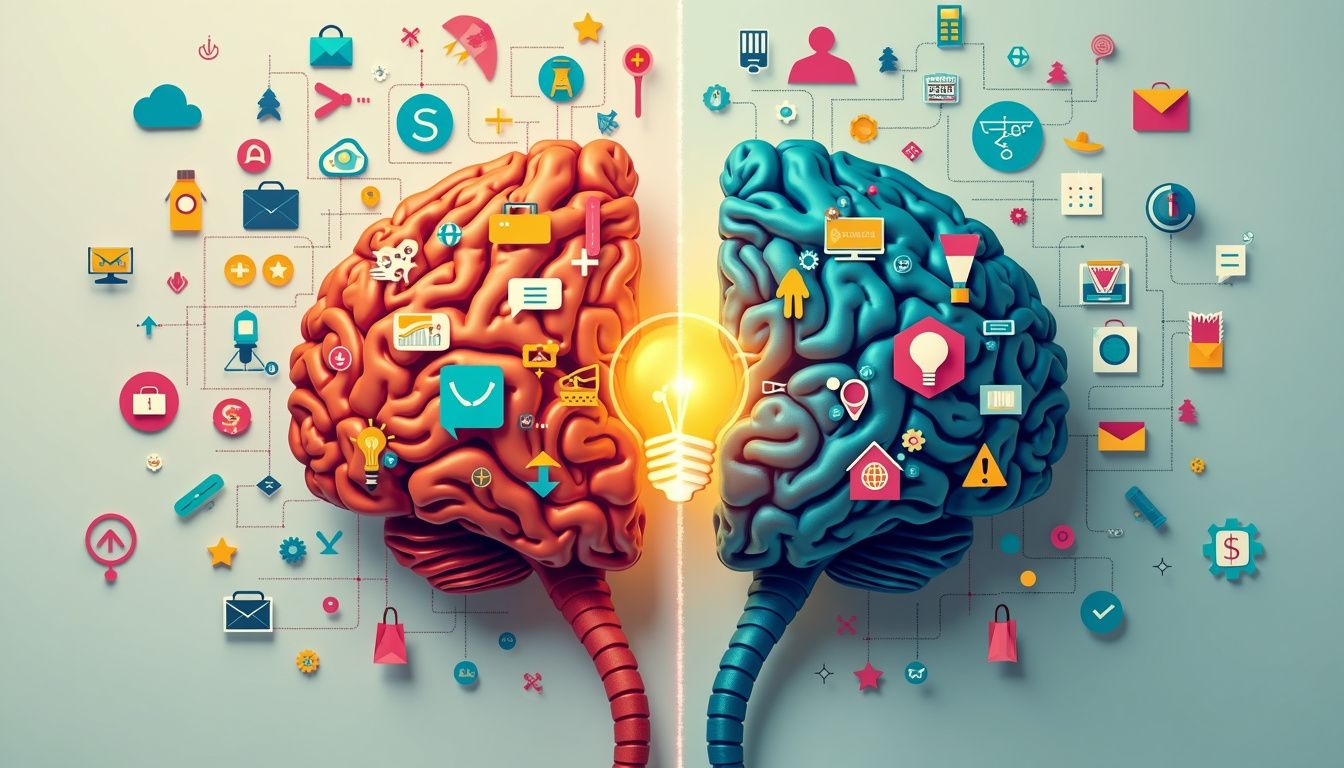
Novelty captivates your attention by tapping into your brain's innate curiosity and reward systems. When you encounter something new and unique, your brain releases dopamine, enhancing pleasure and motivation. This psychological response makes novel experiences more memorable and engaging. In marketing and education, novelty can be a powerful tool to grab and maintain audience interest. However, it's essential to balance innovation with familiarity to avoid overwhelming or confusing your audience. By strategically introducing new elements alongside recognizable frameworks, you can create sustainable, attention-grabbing experiences. Understanding the science behind novelty can help you harness its power effectively in various aspects of life and business.
Key Takeaways
- Novel stimuli trigger dopamine release, enhancing pleasure and motivation while capturing attention more effectively.
- Balancing innovation with familiarity maintains consumer trust while introducing new elements to capture interest.
- Interactive and gamified marketing experiences engage audiences through hands-on participation with products or services.
- Gradual integration of new elements prevents overwhelming audiences while maintaining their attention and comfort.
- Strategic use of novelty in marketing and education improves engagement, retention, and overall effectiveness of communication.
The Psychology of Novelty
Novelty-seeking is hardwired into our brains. You're naturally drawn to new experiences, objects, and information because they offer potential rewards and learning opportunities. This innate curiosity has been essential for human survival and progress throughout history.
Your brain releases dopamine when you encounter something novel, creating a sense of pleasure and motivation. This neurochemical response encourages you to explore and engage with new stimuli. However, it's important to balance this drive with caution, as not all new experiences are beneficial or safe.
The psychology of novelty explains why you're more likely to remember unique events or information. Your brain pays special attention to things that stand out from the familiar, making them easier to recall later. This mechanism helps you learn and adapt to your environment more effectively.
Novelty can also combat boredom and improve your mood. Engaging with new experiences or ideas can boost your creativity and problem-solving skills. However, constantly seeking novelty may lead to restlessness or risk-taking behavior, so it's vital to maintain a healthy balance.
You can harness the power of novelty in your daily life by introducing small, safe changes to your routine. Try a new hobby, take a different route to work, or learn about an unfamiliar topic. These low-risk novelty experiences can provide mental stimulation without compromising your safety.
Understanding the psychology of novelty allows you to make informed decisions about when and how to embrace new experiences. By doing so, you can reap the benefits of novelty while maintaining a sense of security and stability in your life.
Novelty in Marketing Strategies
Marketing strategies that leverage novelty can captivate your audience and set your brand apart. By introducing fresh and unexpected elements into your campaigns, you'll pique curiosity and create a memorable impression.
However, it's essential to balance innovation with familiarity to maintain a sense of safety for your customers.
When implementing novelty in your marketing, consider these approaches:
- Limited-time offers: Create a sense of urgency by introducing unique, time-sensitive promotions. This taps into the fear of missing out while providing a safe opportunity to try something new.
- Unexpected partnerships: Collaborate with brands or influencers outside your industry to surprise your audience. Ensure these partnerships align with your values to maintain trust.
- Interactive experiences: Develop engaging, hands-on activities that allow customers to safely explore your products or services in new ways.
- Innovative packaging: Redesign your product packaging to stand out on shelves while maintaining recognizable brand elements.
- Storytelling with a twist: Share your brand's narrative using unconventional formats or platforms, keeping your core message consistent for reliability.
- Gamification: Incorporate game-like elements into your marketing to make engagement fun and rewarding while preserving a sense of security.
Remember to thoroughly test new marketing strategies before full implementation.
Monitor customer feedback and adjust accordingly to guarantee your novel approaches resonate positively with your audience.
Educational Impact of Novel Approaches
How can innovative teaching methods revolutionize the learning experience? By incorporating novel approaches, educators can create a more engaging and effective learning environment.
When you're exposed to new and unique teaching techniques, your brain becomes more receptive to information, leading to improved retention and understanding.
Novel approaches in education can:
- Increase student engagement and participation
- Enhance critical thinking and problem-solving skills
- Promote creativity and innovation
- Improve overall academic performance
You'll find that these innovative methods often involve interactive elements, technology integration, and real-world applications.
For example, gamification in education can transform complex subjects into enjoyable learning experiences, making it easier for you to grasp difficult concepts while feeling safe and supported.
Virtual reality and augmented reality tools can provide immersive learning experiences, allowing you to explore historical events or scientific phenomena in a controlled, risk-free environment.
This hands-on approach can deepen your understanding and create lasting memories.
Project-based learning encourages you to apply your knowledge to real-world scenarios, fostering practical skills and boosting confidence.
You'll learn to work collaboratively, manage resources, and think critically – all valuable skills for your future career.
Neuroscience Behind Attention and Novelty
According to neuroscience, your brain is wired to pay attention to novelty. This innate response to new and unique stimuli is a survival mechanism that has evolved to help you detect potential threats and opportunities in your environment.
When you encounter something novel, your brain releases dopamine, a neurotransmitter associated with pleasure and reward, which enhances your focus and motivation to explore further.
The brain's reaction to novelty involves several key areas. The hippocampus, vital for memory formation, is particularly sensitive to new information. It helps you compare novel stimuli to existing memories, determining if something is truly new or just a variation of the familiar.
The amygdala, responsible for processing emotions, also plays a role in evaluating the potential importance of novel stimuli.
Your prefrontal cortex, involved in decision-making and attention control, works alongside these regions to prioritize novel information. This prioritization can sometimes override other cognitive processes, explaining why you might find it challenging to focus on routine tasks when something new and exciting is present.
Understanding this neuroscience can help you create safer, more effective learning and work environments. By introducing controlled novelty, you can boost attention and retention without overwhelming the brain's processing capacity.
However, it's important to balance novelty with familiarity, as too much new information can lead to cognitive overload and stress. By thoughtfully incorporating new elements into your routines, you can harness your brain's natural affinity for novelty while maintaining a sense of security and stability.
Balancing Familiarity and Innovation
Striking the right balance between familiarity and innovation is vital for capturing and maintaining attention. You'll want to provide enough familiar elements to make your audience feel comfortable, while introducing new and exciting aspects to keep them engaged. This delicate equilibrium guarantees that your content or product doesn't become stale or overwhelming.
When introducing novel concepts, it's important to anchor them to existing knowledge. This approach helps your audience process new information more easily and reduces the risk of cognitive overload. You can achieve this by using analogies, metaphors, or relatable examples that connect the unfamiliar with the familiar.
To effectively balance familiarity and innovation, consider these four strategies:
- Gradually introduce new elements alongside familiar ones.
- Use a recognizable framework or structure to present novel ideas.
- Provide clear explanations and context for innovative concepts.
- Incorporate feedback loops to gauge audience comfort and understanding.
Remember that people have different thresholds for novelty. Some may embrace radical changes, while others prefer incremental improvements. By understanding your audience's preferences and comfort levels, you can tailor your approach to meet their needs.
As you endeavor to balance familiarity and innovation, always prioritize clarity and relevance. Confirm that any new elements you introduce serve a purpose and add value to your audience's experience.
Pitfalls of Overusing Novelty
While novelty can be a powerful tool for capturing attention, relying on it too heavily can backfire. You might find yourself constantly chasing the next big thing, sacrificing substance for shock value. This approach can lead to several pitfalls that may compromise your message and audience engagement.
Firstly, overusing novelty can create fatigue in your audience. When everything is new and unique, nothing truly stands out. Your audience may become desensitized to your attempts at innovation, leading to diminishing returns on your efforts. They might start to perceive your content as gimmicky or lacking depth.
Secondly, an overemphasis on novelty can undermine your credibility. If you're always trying to be different, you might stray too far from established best practices or proven methods. This can make your audience question your expertise and reliability, especially in fields where consistency and trust are paramount.
Thirdly, constantly pursuing novelty can be resource-intensive and unsustainable. You'll need to invest significant time and effort into generating new ideas, which may not always yield proportional results. This can lead to burnout and a decline in the quality of your work.
Lastly, prioritizing novelty over clarity can confuse your audience. If your innovative approach obscures your core message, you've defeated the purpose of communication. Remember, your primary goal should be to convey information effectively, not just to be different.
To avoid these pitfalls, aim for a balanced approach. Use novelty strategically to enhance your message, not overshadow it. Verify that your innovative elements serve a purpose and align with your overall objectives.
Cultivating Sustainable Novel Experiences
Creating sustainable novel experiences involves three key strategies that balance innovation with consistency.
You'll want to focus on gradual evolution rather than constant radical changes. This approach allows you to maintain a familiar foundation while introducing fresh elements that captivate your audience's attention.
To cultivate sustainable novelty, consider these four essential steps:
- Identify core elements: Determine the fundamental aspects of your product or experience that resonate with your audience. These elements should remain relatively stable to provide a sense of familiarity and safety.
- Implement incremental changes: Introduce small, well-thought-out modifications that enhance the overall experience without overwhelming your audience. This approach allows for continuous improvement while maintaining a sense of comfort.
- Gather and analyze feedback: Regularly collect input from your audience to understand their preferences and expectations. Use this information to guide your innovation efforts and guarantee that changes align with their desires.
- Create a roadmap: Develop a long-term plan for introducing novel elements, guaranteeing a steady stream of fresh experiences without exhausting your resources or alienating your audience.
Final Thoughts
You've explored the allure of novelty, yet ironically, there's nothing new under the sun. You've learned how to captivate attention with fresh ideas, but isn't it amusing that even this concept is recycled? As you endeavor to balance innovation and familiarity, remember that today's groundbreaking discovery is tomorrow's cliché. So go ahead, chase the novel – just don't be surprised when you find yourself running in circles, right back where you started.